
Last updated October 30, 2026
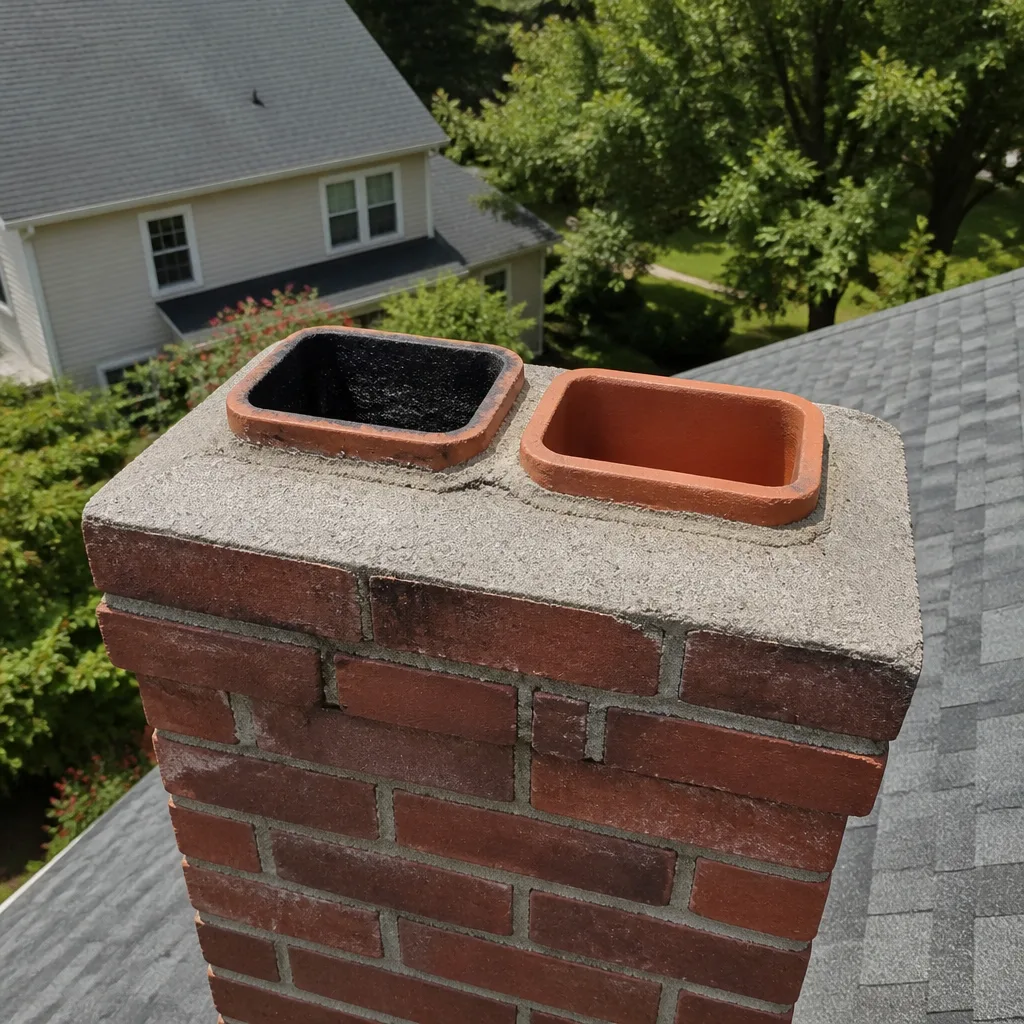 Sweep & inspection
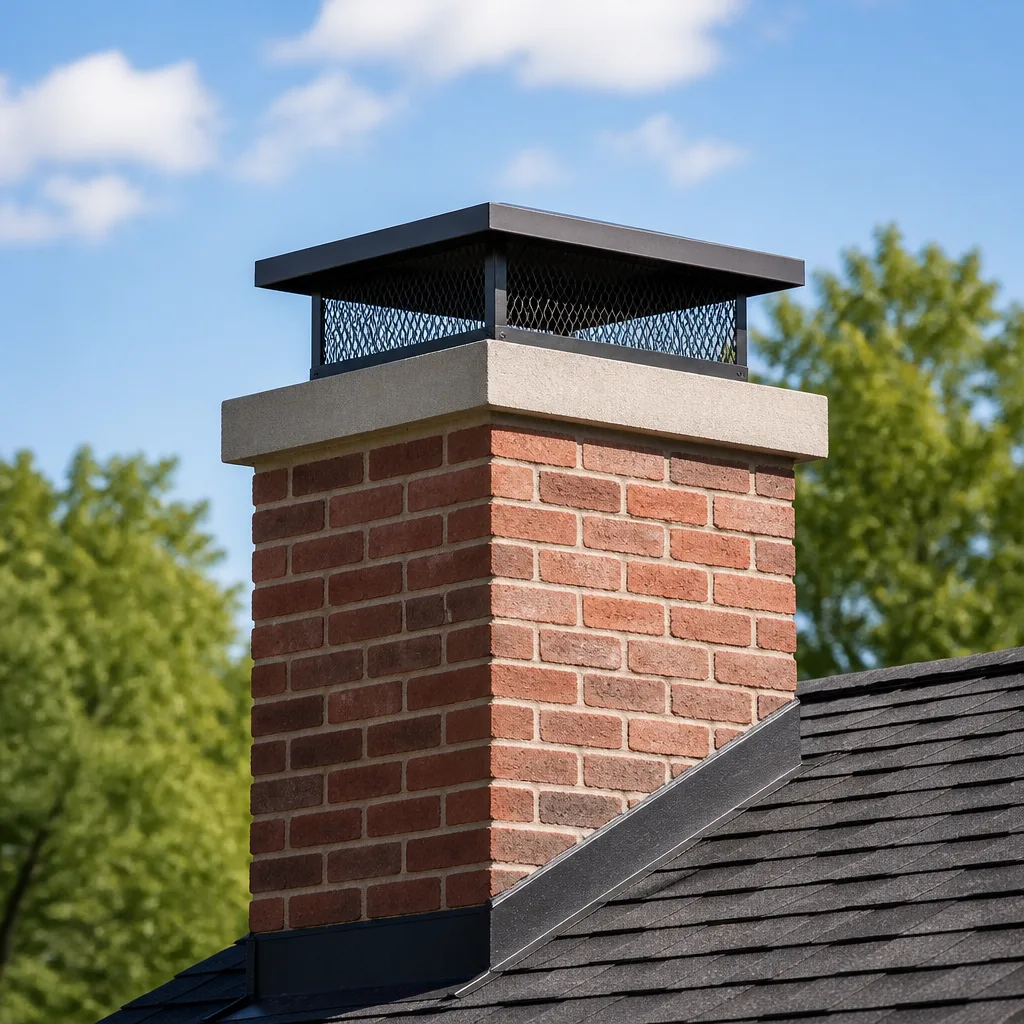 Caps & crowns
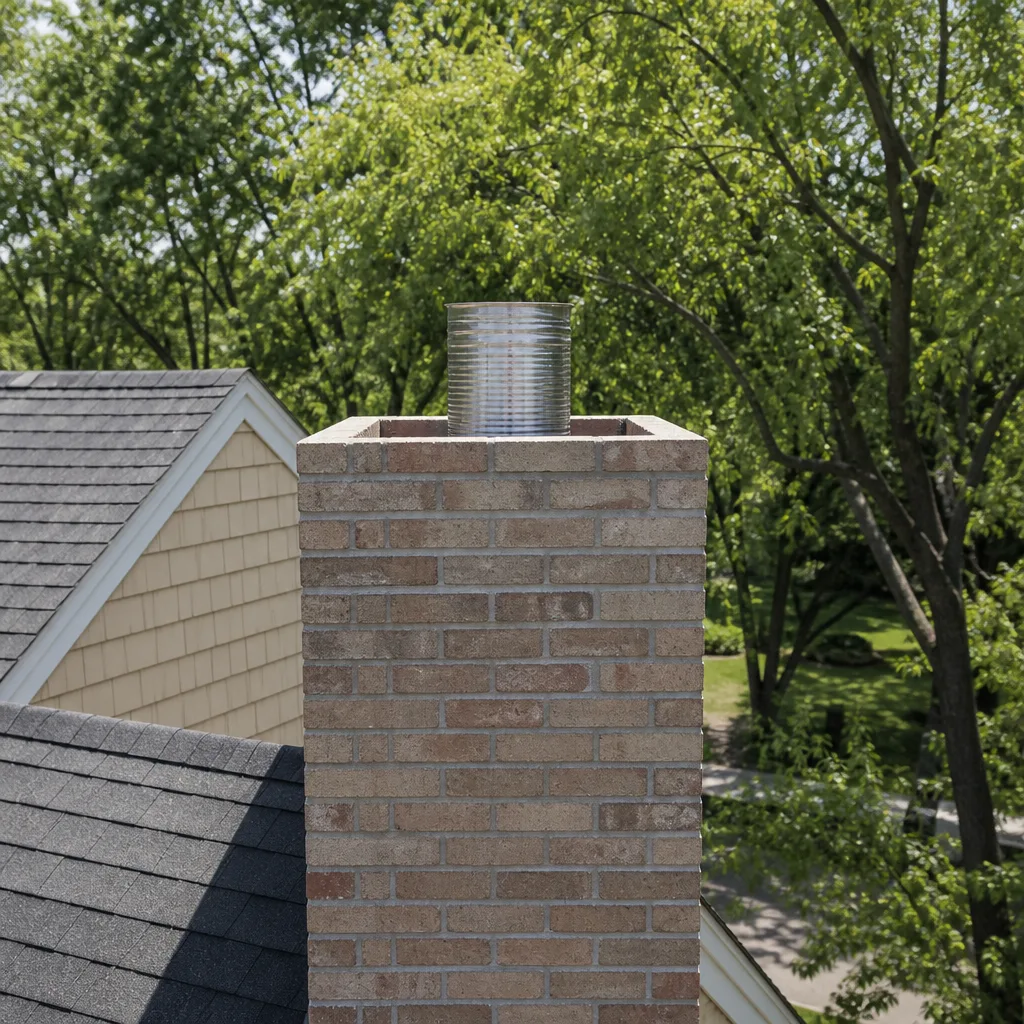 Flue relining
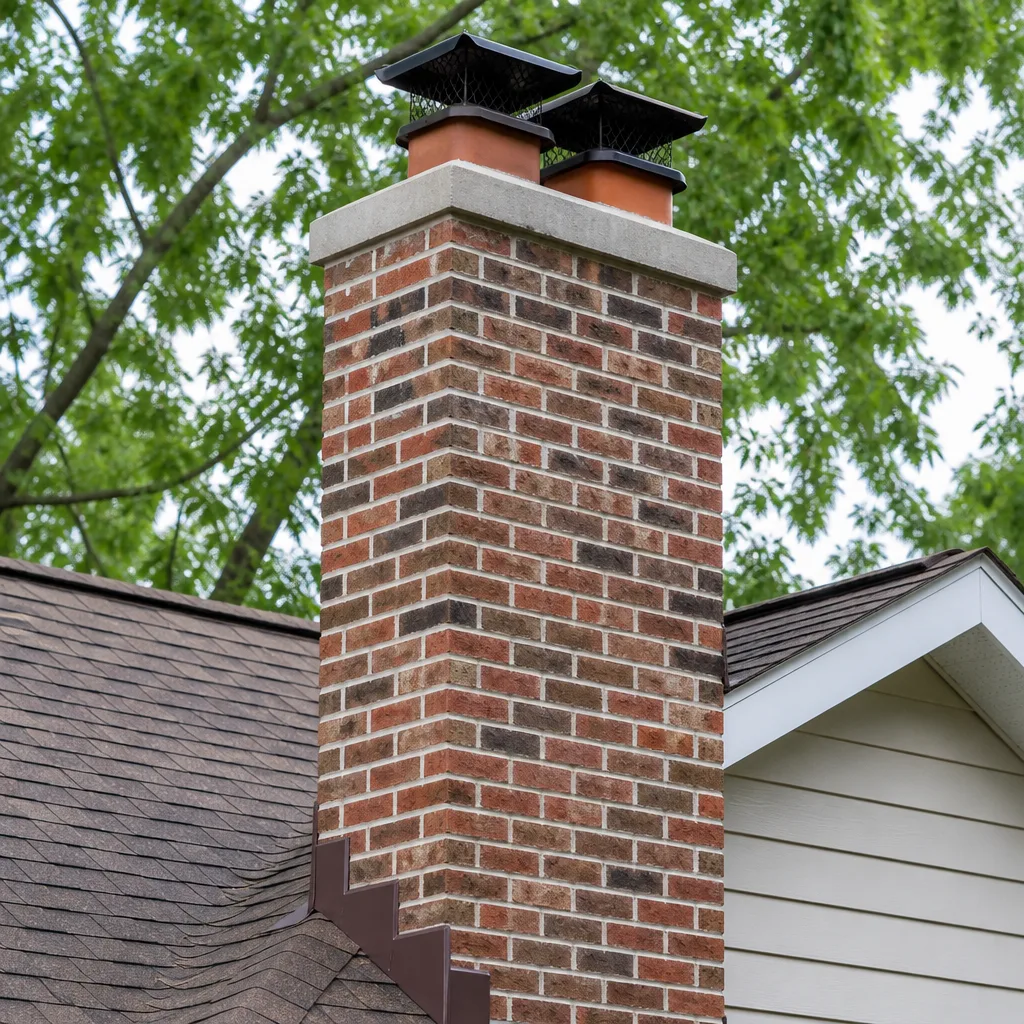 Masonry repair
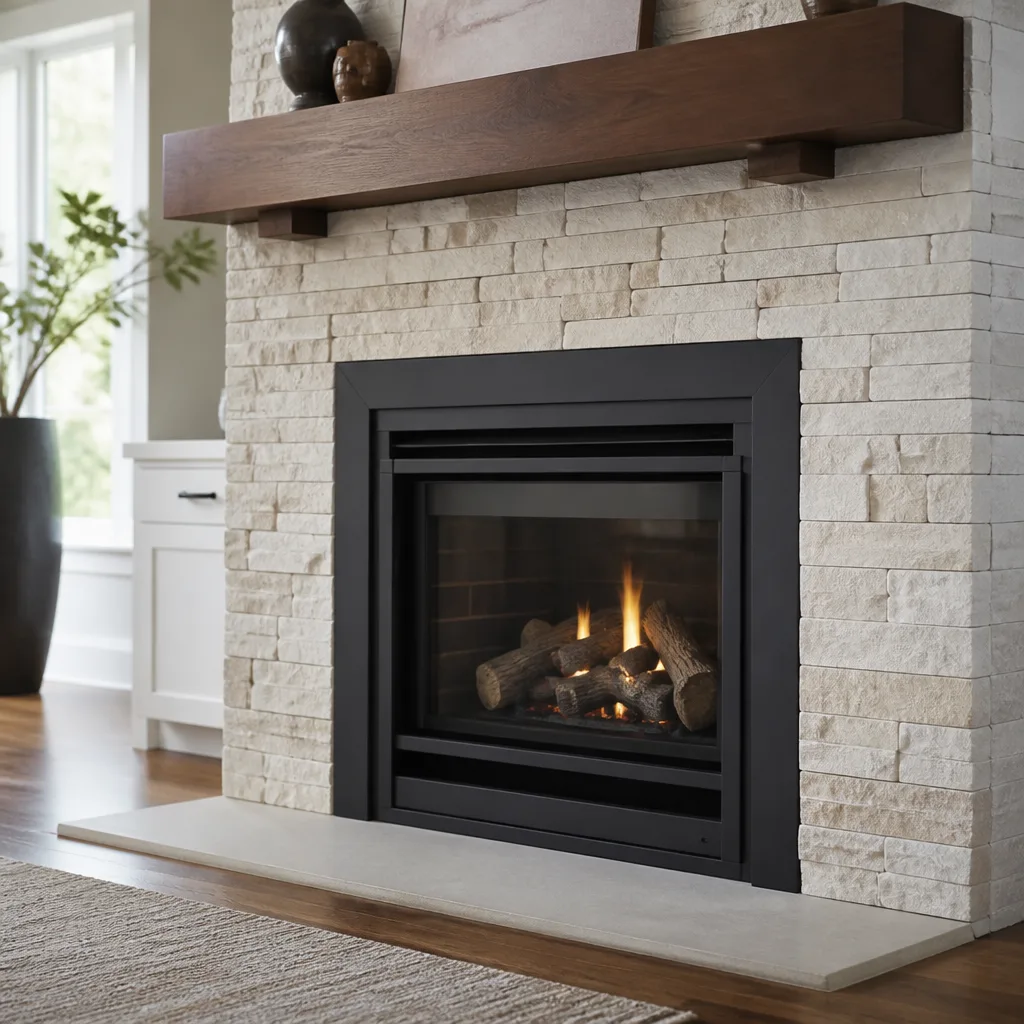 Gas fireplace service
Level 1 sweep and inspection to the NFPA 211 annual standard - flue, crown, cap, and flashing checked and photographed
Chimney sweep logs do not sweep chimneys. They loosen some creosote - which then falls where a brush and vacuum still have to collect it.
Chimney Sweep Maintenance Checklist for Cicero Homeowners
Checking your chimney cap before you check your flue liner is like inspecting your roof gutters before confirming the rafters are sound. You’re documenting symptoms while missing the cause. Every fall, Cicero homeowners climb ladders, squint at brickwork, and poke at dampers without ever answering the one question that actually matters: what condition is the liner hiding? This guide reorders the maintenance checklist the way a working sweep actually approaches a chimney system, from the flue outward, so you can separate what needs seasonal attention from what needs a repair professional. We’ve structured it around the realities of Cicero’s freeze-thaw winters and wood-burning season, and the exact sequence that prevents small issues from becoming masonry failures.
Quick Answer
A proper chimney maintenance checklist for Cicero homeowners follows the flue-first sequence: inspect the liner condition before any sweeping, verify the damper operates cleanly, check exterior masonry for freeze-thaw spalling and efflorescence, clean the smoke chamber and firebox, then finish with exterior components like the cap and crown. Sequence matters because a compromised liner changes everything downstream, and cleaning a flue with hidden structural damage can make the problem worse. This guide walks through each step in the order a trained Chimney Sweep services professional performs it.
Styles & brands we work with
Table of Contents
- Flue-First Sequencing: Why the Liner Comes Before the Cleaning
- Damper Operation as a Diagnostic Tool
- Exterior Masonry Checks After Cicero Freeze-Thaw Cycles
- Smoke Chamber and Firebox: The Overlooked Middle Section
- Chimney Cap and Crown: Your First Line of Defense
- Carbon Monoxide Detector Placement Relative to Flues
- Recordkeeping: Building a Traceable Service History
- Seasonal Timing for Cicero Homeowners
Flue-First Sequencing: Why the Liner Comes Before the Cleaning
The first thing a professional sweep does when approaching any chimney in Cicero is assess the flue liner’s condition. Not clean it. Assess it. The logic is straightforward: if the clay tile liner has spalled, cracked, or separated, introducing a wire brush into that environment can dislodge already-compromised material and turn a hairline crack into an open gap. A flue with gaps between tile sections is a direct exhaust path into the home’s framing, and no amount of sweeping fixes that.
Clay tile liners, which remain the most common type in Cicero homes built between the 1950s and 1990s, are durable but not immortal. They crack under thermal stress, particularly when a chimney that has sat cold all winter is hit with a hot fire. The rapid expansion creates vertical cracking that often runs the full length of a tile section. Once a crack exists, creosote and moisture migrate into it, and the next freeze-thaw cycle widens it further.
Before you schedule any cleaning, run through this liner assessment:
- Shine a bright flashlight up from the firebox with the damper fully open. Look for obvious gaps between tile sections, vertical cracks, or sections that appear to have shifted out of alignment.
- Check the cleanout door at the base of the flue (usually in the basement or crawlspace). Debris that looks like thin, curved clay shards is spalled liner material, and that is a structural warning sign, not just a cleaning issue.
- Note any white, chalky deposits on exterior brick near the flue line. That is efflorescence from moisture moving through masonry, and it often indicates a liner that is no longer containing hot gases or moisture properly.
- Consider the age of the home. If the original clay liner is in place on a house built before 1985, it is beyond its expected service life and should be professionally evaluated with a camera inspection before the first fire of the season.
When a liner is compromised, the fix does not always mean a full teardown. We work with HeatShield, a cerfractory repair material that restores liner integrity in qualifying cases without requiring demolition of the existing flue. It’s applied as a specialty coating that fills gaps, seals cracks, and creates a smooth interior surface that resists creosote buildup. Not every damaged liner is a candidate, but when conditions allow, it is a far less invasive solution than a full stainless reline. The key is knowing the difference, and that requires a camera inspection, not a guess from the rooftop.
For homeowners who do require a full reline, our Chimney Repair in Cicero service installs DuraFlex flexible liner systems, the industry standard for retrofit installations. But the point of the checklist sequence remains: diagnose before you clean. Sweeping a structurally compromised flue is wasted effort and false confidence.
Damper Operation as a Diagnostic Tool
A damper is more than a metal flap that opens and closes. In a Cicero chimney, it is a diagnostic instrument that tells you about moisture exposure, combustion behavior, and whether the firebox has been used improperly. A throat damper that is stiff, corroded, or missing entirely signals that the chimney has been left open to the elements, or that fires have burned too hot for the system’s design.
Here’s what to look for, and what each condition suggests:
- Stiff or difficult operation. Creosote and moisture combine to form an acidic residue that corrodes damper hinges and warp plates. If the handle takes real force to move, the damper has likely been exposed to rain or snow through an uncapped flue, or the chimney has drafted poorly and allowed condensation to form. This is a moisture management problem first, an operational nuisance second.
- Visible rust or pitting on the damper plate. Rust means water has been entering the flue consistently. The source is almost always a failed or missing chimney cap, or a cracked crown. Fix the water entry point before replacing the damper, or the new one will rust out within a few seasons.
- A damper that will not close fully. This may be warping from heat, or debris accumulation on the hinge track. An open damper is a permanent hole in your building envelope. It draws conditioned air out of the house all winter, even when the fireplace is not in use, and provides an open path for pests.
- A missing damper. Some older Cicero homes had dampers removed during renovations, or they were never installed correctly. A missing damper means the flue has been wide open to rain, snow, birds, and cold air. Before any cleaning happens, a replacement damper needs to be on the work order.
Think of the damper as the chimney’s gate. If the gate does not seal, everything behind it is exposed. Fireplace dampers are relatively inexpensive to replace compared to the damage an open flue causes over a Cicero winter. When we perform a Chimney Sweep in Cicero visit, damper operation is always checked as part of the inspection, because a sweep that ignores the damper is a sweep that missed the first sign of a moisture problem.
Exterior Masonry Checks After Cicero Freeze-Thaw Cycles
Cicero’s climate is unforgiving to brick and mortar. The cycle is predictable: snow melts into the masonry pores during the day, temperatures drop below freezing at night, and the trapped water expands by roughly nine percent in volume. Repeat that a few dozen times each winter, and every mortar joint is under stress. The result is the slow degradation of the chimney’s exterior structure, and the evidence is visible if you know where to look.
Three conditions deserve specific attention from Cicero homeowners:
Spalling
Spalling is when the face of a brick pops off, leaving a rough, recessed surface and often exposing the softer brick interior. It is not cosmetic. A spalled brick has lost its fire-hardened protective skin and will continue to erode, eventually creating voids in the chimney structure. You’ll see brick flakes on the roof or on the ground near the chimney base. Standing at ground level with binoculars is often sufficient to spot early spalling on the upper courses.
Efflorescence
This is the white, chalky deposit that appears on brick surfaces. It is dissolved salts carried to the surface by water migrating through the masonry. Efflorescence itself is harmless, but it is a moisture indicator. Persistent efflorescence on a chimney that has been recently repointed suggests water is still entering from somewhere, usually a failed cap or cracked crown. Wipe a small area clean and check again after the next rain. If it returns quickly, the water source is active.
Mortar Joint Erosion
Run a flat-head screwdriver lightly across the mortar joints. If the mortar crumbles and falls away, it has lost its binding strength. In Cicero’s climate, mortar joints typically need repointing every 25 to 30 years, but chimneys on the north and west faces of homes, which take the brunt of winter weather, may need attention sooner. Look specifically at the joints within two feet of the top of the chimney, where water exposure is highest.
These masonry checks are not part of a routine sweep, which is why so many checklists miss them entirely. The interior flue can be in acceptable condition while the exterior structure is quietly failing. A full-service specialist looks at both sides of the system, because a structurally sound interior is meaningless if the chimney itself is crumbling. When masonry work is needed, it is a repair, not a cleaning issue, and it belongs on the same work order as any liner repairs.
Smoke Chamber and Firebox: The Overlooked Middle Section
Between the firebox where the fire burns and the flue that carries exhaust upward sits the smoke chamber, the sloped transition section that funnels smoke from the wide firebox opening into the narrow liner. In most Cicero homes, the smoke chamber is built with corbeled brick, meaning the bricks step inward as they rise. Those steps create ledges, and creosote loves ledges.
This section is skipped in a surprising number of homeowner checklists because it is not visible from the rooftop or from the firebox floor without looking up at an awkward angle. But accumulated creosote in the smoke chamber is a serious fire risk, because the chamber sits directly above the firebox and experiences the highest temperatures of any part of the system during a chimney fire.
Here is the smoke chamber checklist:
- Look up from the firebox with a bright flashlight. You will see the sloping walls of the smoke chamber. Note any thick, tar-like creosote deposits, any visible cracks in the corbeled brick, or any smoke stains that suggest draft problems.
- Check for parging failure. Many smoke chambers are parged, meaning they have been coated with a smooth refractory mortar to create an even surface. When parging fails, chunks of mortar fall and the rough brick underneath accumulates creosote far more quickly. Fallen debris at the bottom of the chamber or in the firebox is a sign of parging failure.
- Examine the firebox itself. Look at the floor and side walls. Cracked firebrick should be replaced, and the mortar between firebricks should be intact. A firebox that has shifted or developed a gap at the rear wall is a structural concern that needs professional assessment.
- Crown condition. Look for cracks in the crown surface, especially around the flue tile. Hairline cracks grow wider with each freeze-thaw cycle. A cracked crown allows water to seep into the masonry below, where it freezes and expands. Crown cracks are repairable with the right materials, but they will not self-heal.
- Cap presence. An uncapped flue is an open pipe into your chimney. Rain, snow, leaves, birds, squirrels, and raccoons all enter through an uncapped flue. If you do not have a cap, installing one is the single highest-value chimney improvement you can make in Cicero.
- Cap condition. For chimneys that have a cap, look for rust on galvanized steel caps (a sign the cap is aging out), damaged mesh screening, or a cap that has shifted out of position. A cap that is not centered over the flue opening still allows water entry on windy days.
- Spark arrestor mesh. The mesh around the cap should be intact, with openings small enough to stop embers but not so small that creosote buildup blocks airflow. Damaged mesh needs replacement, not repair.
- Mount at least 15 feet from any fireplace or wood stove. A detector closer than that will frequently read elevated CO during normal fire startup and shut-down, leading to false alarms and eventual detector disablement.
- Place one detector on each sleeping floor, in the hallway outside bedroom doors. This is building code minimum in most municipalities, and it is the location where CO exposure is most dangerous. Sleeping occupants are the most vulnerable.
- If the home has an attached garage, place a detector in the room directly above the garage. Car exhaust in the garage can migrate upward, and this placement catches it before it reaches sleeping areas.
- Do not mount detectors directly above or beside the fireplace. CO is slightly lighter than air and will rise with warm air currents, but a detector directly above the firebox will catch normal combustion byproducts and lose its value as an early-warning device.
- Test monthly. Replace every five to seven years, depending on the model. The sensor inside has a lifespan, and an expired sensor is a decorative plastic box with a battery.
- Date of service and company name. This establishes the timeline. Future contractors can see when work was done, and insurance adjusters can verify that maintenance was not neglected.
- Condition notes from the sweep. What did the technician find? Creosote level (usually graded as light, moderate, or heavy on a scale of 1-3), liner condition, damper operation, and any water damage noted. If the sweep did not document these, ask for them.
- Repairs completed. If a liner repair was done (for example, a HeatShield application), who did it and when? Product names and warranty information should be attached. If a cap was installed, note the manufacturer and model.
- Photos. A camera inspection is standard practice these days. Ask for the images or a video file. A five-minute video of the flue interior taken during a sweep is the single most valuable record you can keep, because it lets any future contractor see exactly what condition the flue was in on that date.
- Cost and receipt. This matters for warranty claims and for real estate disclosure.
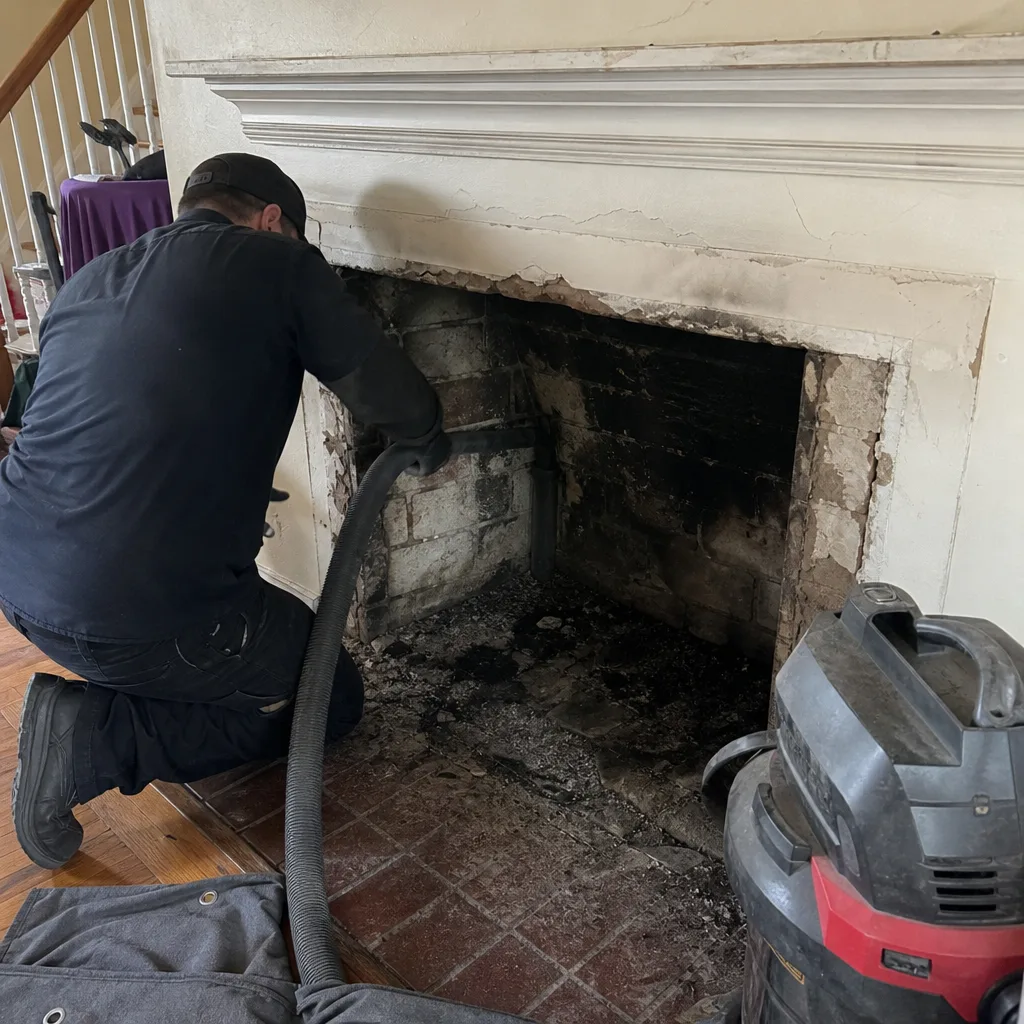
Smoke chamber cleaning is more involved than flue brushing, because the shape resists mechanical brushes. Professional sweeps use specialized methods to access the ledges, and in heavy creosote cases, a chemical treatment may be necessary to break down the tar-like deposits before removal. This is not a do-it-yourself section of the chimney, and it is one of the reasons a professional sweep is worth the cost—see our Chimney Sweep Troubleshooting: Common Problems and How to Fix Them for when to call in help. In one pass through the firebox, a trained eye spots smoke chamber damage, firebox cracks, and damper issues simultaneously.
Chimney Cap and Crown: Your First Line of Defense
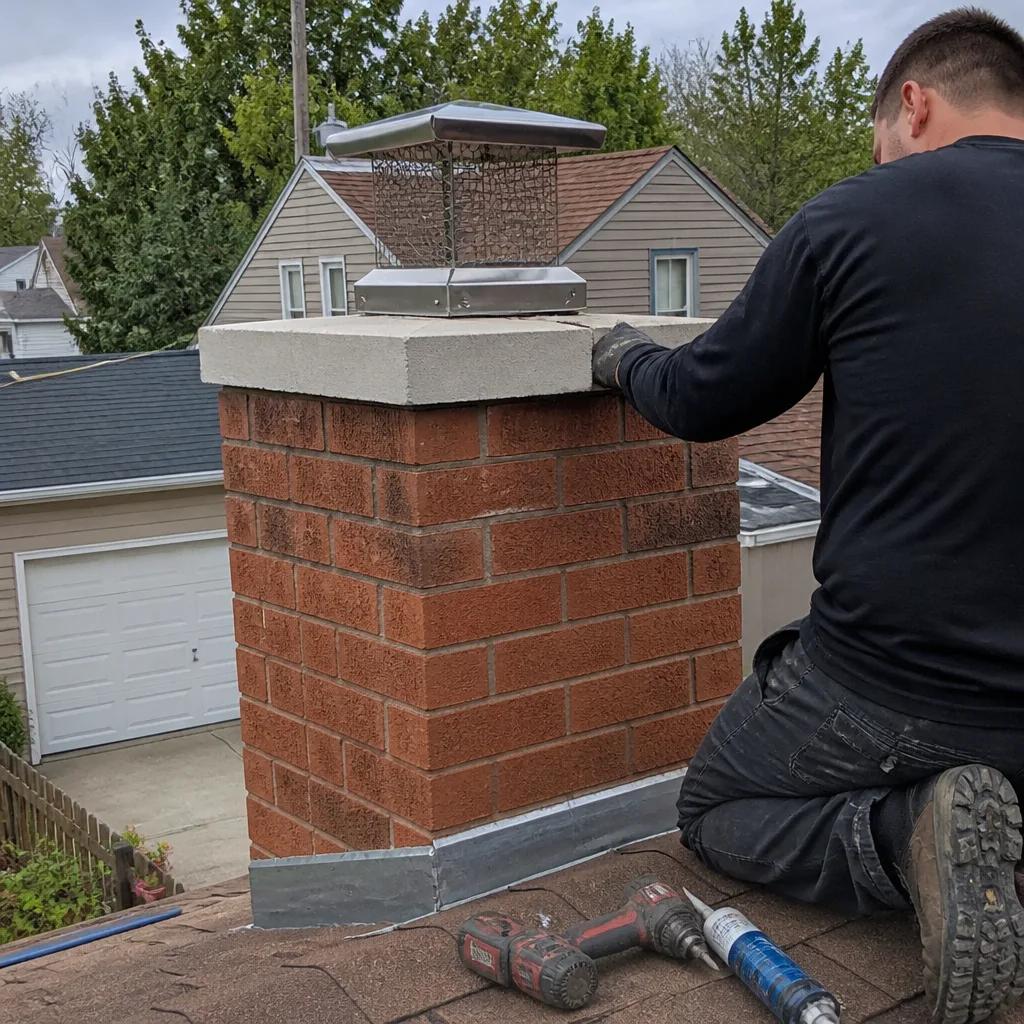
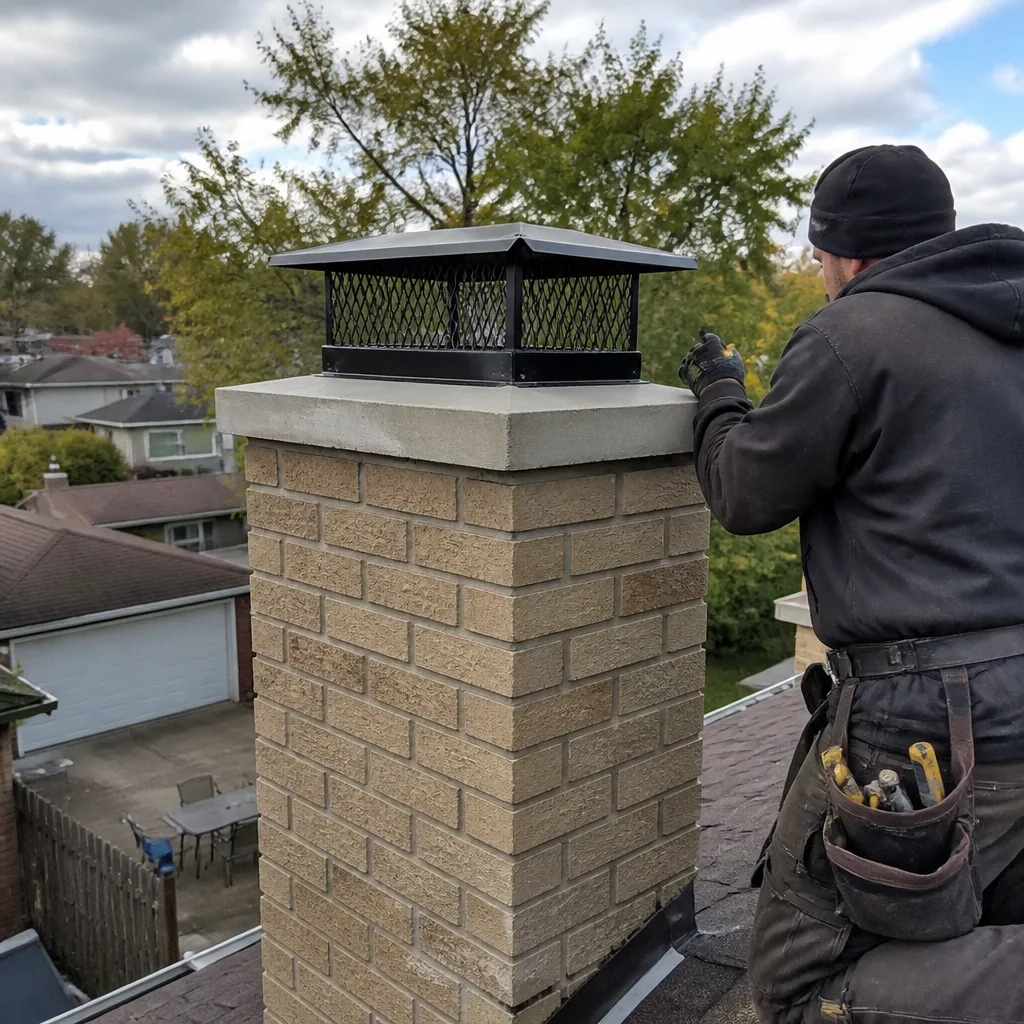
The cap and crown sit at the very top of the system, and in Cicero’s climate, they are the difference between a chimney that lasts decades and one that needs masonry attention every few years. The crown is the concrete or mortar slab that covers the top of the chimney stack, sloping away from the flue to shed water. The cap is the metal cover, typically stainless steel, that sits over the flue opening itself.
Water entry is the leading cause of chimney deterioration anywhere in the Midwest, and both the crown and the cap are the exit points where water gets in. Here is what to check:
We install chimney caps in Cicero as part of our repair service, using Famco and Copperfield product lines. These are the brands that professional chimney contractors across the country install, and they are built to handle Midwest weather. A proper cap is stainless steel, not painted steel, and it is sized correctly for the flue diameter. The hardware-store universal cap is a false economy in Cicero’s winters.
Carbon Monoxide Detector Placement Relative to Flues
Most maintenance checklists mention carbon monoxide detectors, but almost none address placement relative to the chimney system itself. That omission is a safety failure. A CO detector mounted in the wrong location can read normal when dangerous conditions exist, and a detector mounted too close to a fireplace can false-alarm and get disabled by a frustrated homeowner. Both outcomes are bad.
Carbon monoxide is a product of incomplete combustion. In a properly functioning wood-burning or gas fireplace, CO is drawn up the flue and vented outside. When the flue is blocked, the damper is closed accidentally, or the chimney is not drafting properly, CO can spill into the living space. The detector is your backup for every error the checklist is designed to prevent.
Here is the right way to place CO detectors in a Cicero home with a fireplace:
For homes with gas fireplaces, the relationship between CO and chimney maintenance is even more direct. Gas fireplaces produce CO, and a partially blocked flue or a malfunctioning damper can send that CO into the home with no visible smoke to warn you. The detector is doing work that your eyes cannot.
Recordkeeping: Building a Traceable Service History
Insurance companies, future home buyers, and future chimney contractors all benefit from a documented service history. Yet most Cicero homeowners keep no records at all, relying on memory for the last sweep date and the name of the company that did it. When a chimney-related claim gets filed, or a real estate transaction requires proof of maintenance, that missing record comes back to bite.
A proper chimney service record does not need to be elaborate. It needs to be consistent. Here is what to log after every sweep or inspection:
We recommend keeping a simple folder, physical or digital, with one entry per service visit. If you sell your Cicero home, a documented chimney history is a selling point. If you file an insurance claim after a chimney fire or water damage event, it is evidence of responsible ownership. And if you ever need to switch chimney companies, the new contractor can pick up exactly where the old one left off without guessing.
This level of recordkeeping is what separates a homeowner who maintains a system from one who reacts to problems. The folder costs nothing. The absence of it can cost real money.
Seasonal Timing for Cicero Homeowners
The question of when to perform chimney maintenance in Cicero has a straightforward answer, but the reasoning is often misunderstood. You do not schedule a sweep in October because that is when everyone else does. You schedule it then because the chimney has been sitting dormant all summer, and the first fire of the season is when hidden problems reveal themselves at exactly the wrong moment.
Here is the seasonal logic for Cicero’s climate:
Early fall (September through early October) is the optimal window for a sweep and full inspection. The chimney has had the summer to dry out, which is good for inspection, and any creosote from the prior winter is fully cured and easier to assess. Booking in this window also means any repairs found during the sweep can be completed before the first freezing nights arrive. A liner repair or masonry work done in November is more difficult and more expensive than the same work done in September.
Mid-winter checks are about performance, not cleaning. If you are burning regularly and notice smoke backing into the room, a slow draft, or unusual odors, do not wait until spring to address it. A mid-winter inspection can catch a blocked flue, a damper problem, or a creosote accumulation issue before it becomes dangerous. We do not recommend burning through the season on a “wait and see” basis with a system that is misbehaving.
Spring is for repairs and masonry work. Once the burning season ends, exterior conditions are visible without snow cover, and masonry work can be done in temperatures that let mortar cure properly. Spring is also when water damage from the winter freeze-thaw cycle is most apparent. A spring inspection after a hard Cicero winter is a smart move if you saw spalling or efflorescence during the season.
Summer is for dryer vent work and off-season discounts. While the fireplace sits unused, this is the time to think about the other combustion-exhaust system in the home. We offer Dryer Vent Cleaning in Cicero as a companion service, and the logic is the same: lint is a fire hazard, and a clogged vent works harder all summer when the dryer runs more frequently in humid weather.
The seasonal rhythm applies to the entire home’s exhaust system. Chimney fires happen in winter. Dryer fires happen year-round but spike in the cooler months when dry, static-prone air makes lint ignition easier. A homeowner who services both systems on a schedule is ahead of the curve in Cicero, where both fireplaces and dryers get heavy use.
Common Mistakes to Avoid
- Sweeping before inspecting the liner. If the liner has cracks or gaps, brushing can dislodge damaged tile and worsen the condition. Inspection always precedes cleaning. This one sequencing error is responsible for more unnecessary liner replacements than any other mistake.
- Ignoring the chimney cap because the fireplace “works fine.” A missing or damaged cap does not affect day-to-day performance, which is why it gets skipped. But every uncapped flue is taking on water, and every winter that passes worsens the damage. Installing a cap is the cheapest insurance you can buy for the chimney’s long-term health.
- Using a CO detector placed too close to the fireplace. False alarms conditioned the detector out of service, and now there is no working CO detection anywhere in the home. Placement matters as much as presence.
- Assuming a clean-looking firebox means a clean flue. The firebox can look spotless while the flue is coated in heavy creosote. Creosote forms in the cooler upper sections of the chimney, not in the firebox where the fire burns hottest. You cannot judge flue condition from the fireplace floor.
- Skipping the smoke chamber during visual inspections. Ledged, corbeled brick in the smoke chamber accumulates creosote faster than the smooth flue liner above it. It is the most frequently overlooked section of the system, and it is a primary ignition point during chimney fires.
- Putting off a damper replacement because the fireplace is “only used a few times a year.” A broken damper leaks conditioned air every single day of the heating season, whether the fireplace is lit or not. The cost of a replacement is recovered in a season or two of reduced heat loss.
- Storing records nowhere. A service history that exists only in memory is no history at all. Insurance claims and home sales require documentation, and the absence of it looks like neglect, even when maintenance was done consistently.
See the difference
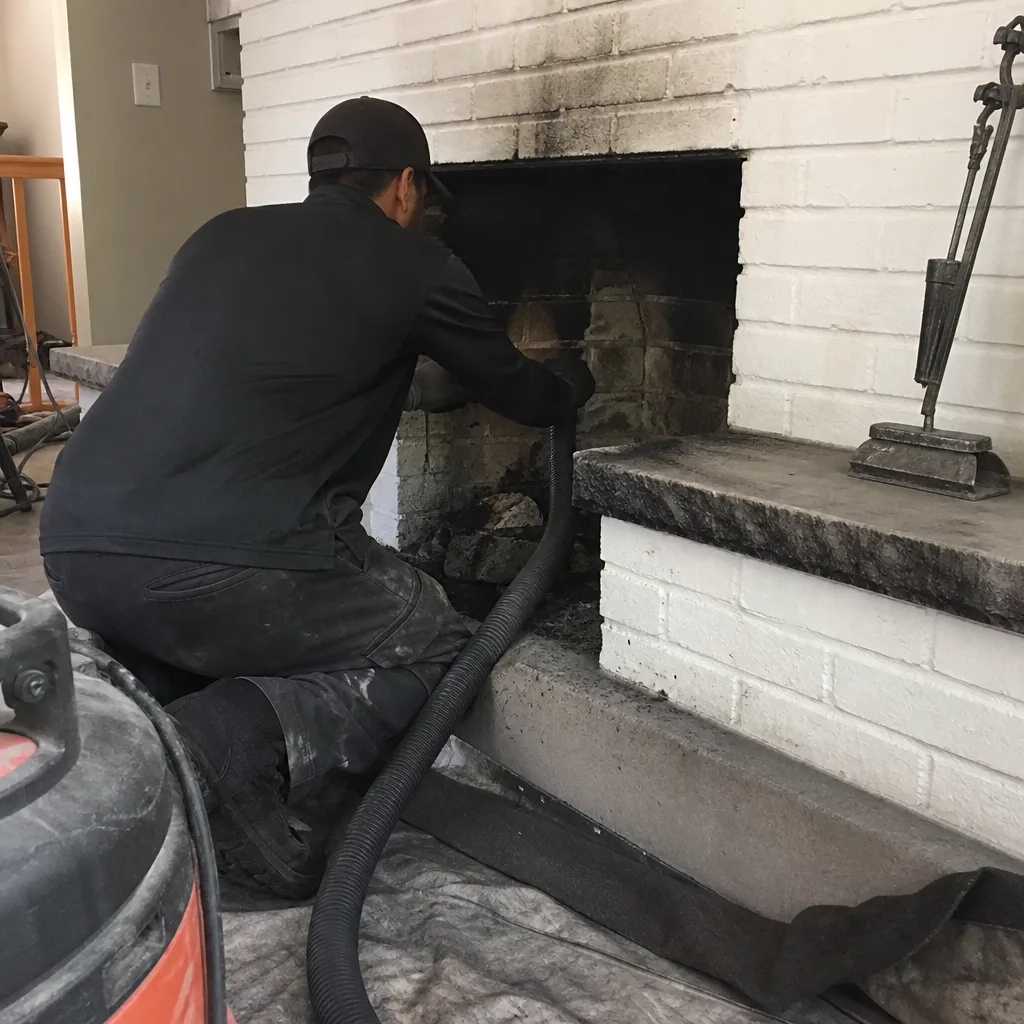 Before
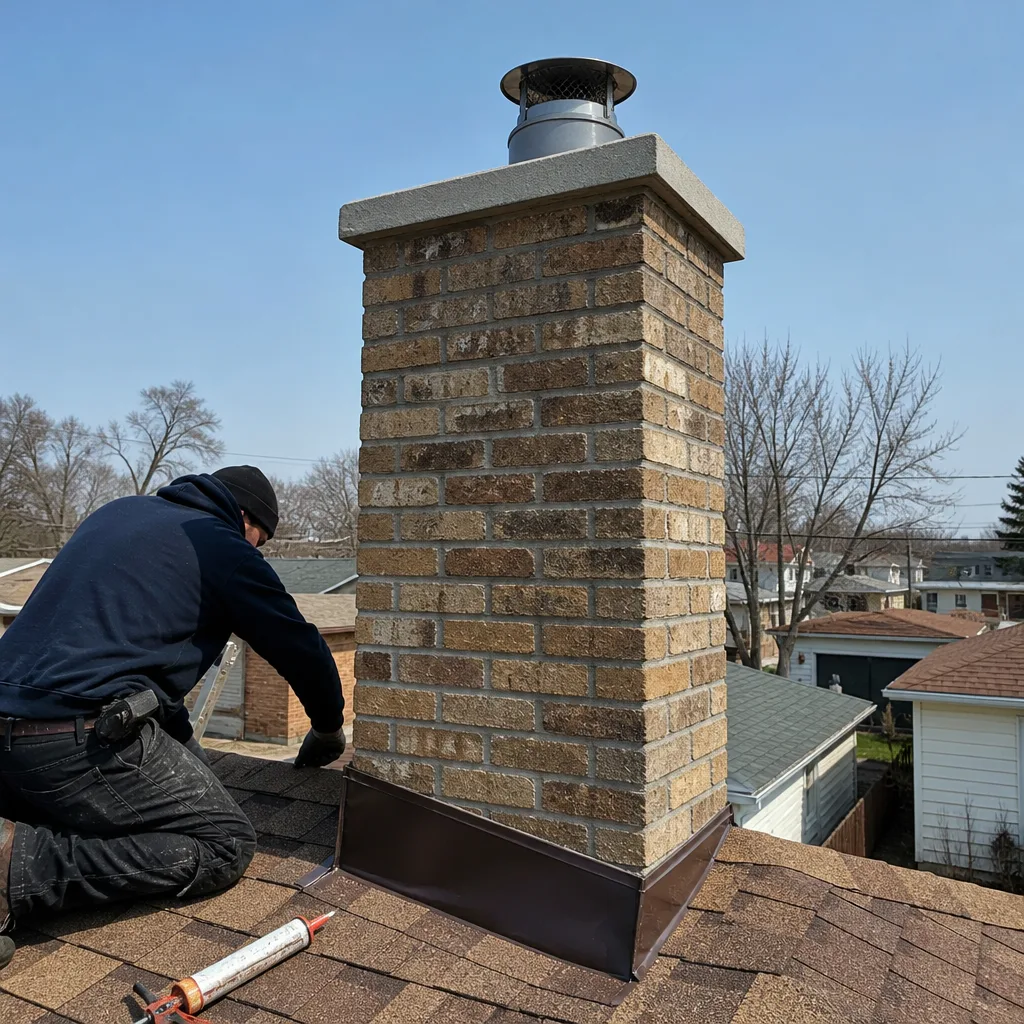 After
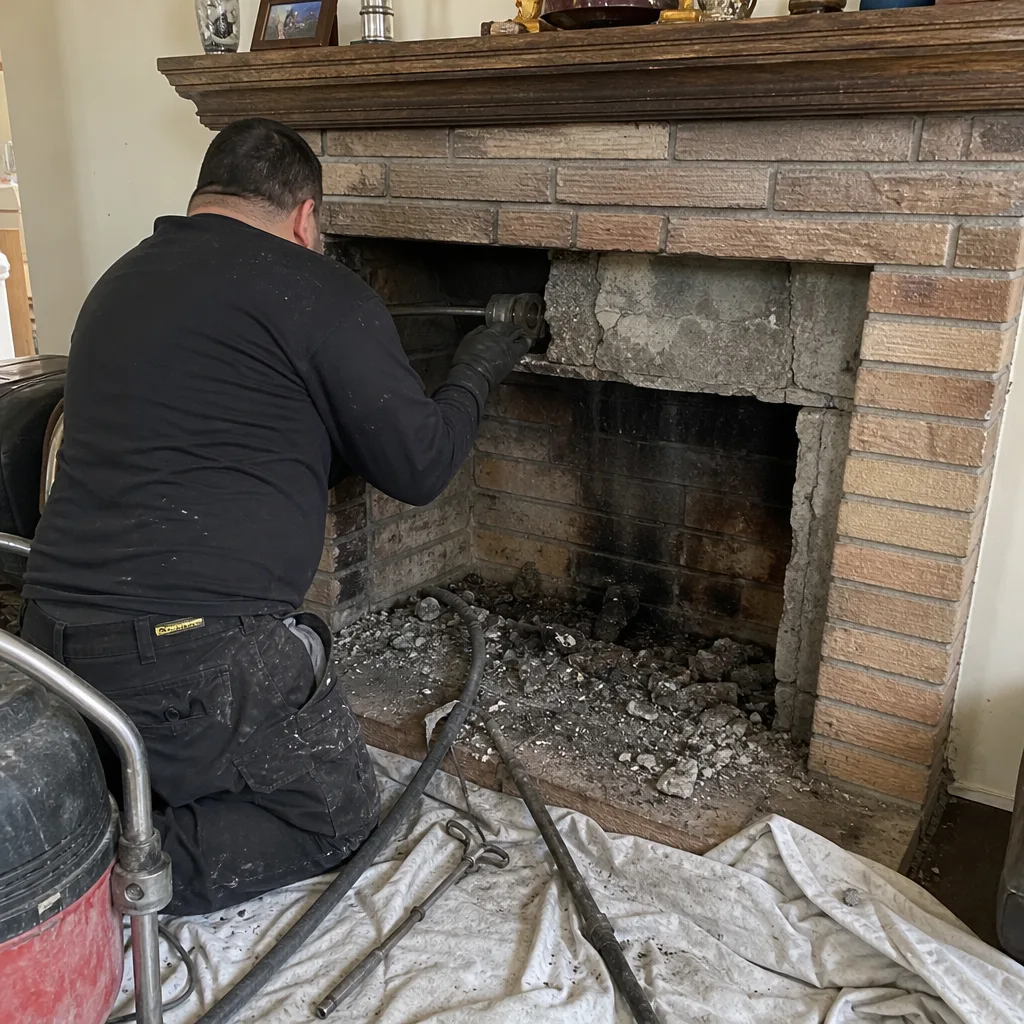 Before
 After
 Before
 After
When to Call a Professional
Some conditions in this checklist require professional attention, not homeowner effort. A camera inspection of the flue liner is the only definitive way to assess liner condition. A parge coating failure in the smoke chamber requires specialized tools and materials. Crown repair, damper replacement, and cap installation all require working at height on a masonry surface that is not forgiving.
Signs that justify an immediate professional inspection include: smoke backing into the room during a fire, a persistent odor from the fireplace even when it is not in use, visible water stains on interior walls near the chimney, falling masonry debris, and any evidence of a chimney fire (loud crackling, dense smoke from the top, or a sudden temperature spike in the flue). These are not checklist items. They are calls to action.
Wexford Chimney Sweep offers free estimates in Cicero. Call (866) 361-2607 to schedule a sweep or inspection, and if you prefer to start with the basics, our Wexford Chimney Sweep home page covers the full range of services we provide throughout the area.
Frequently Asked Questions
A standard chimney sweep and inspection in Cicero typically runs between $150 and $300, depending on the chimney’s height, the amount of creosote present, and whether the smoke chamber requires special attention. Additional services like a camera inspection or creosote treatment add to the base cost. Call (866) 361-2607 for an exact quote, and expect the estimate to be free.
The National Fire Protection Association recommends annual inspection of all chimneys, wood stoves, and vents, and sweeping when any appreciable creosote is present. For wood-burning fireplaces used regularly through a Cicero winter, that typically means an annual sweep. Homes that burn a few fires per season may go every other year, but the inspection should still happen annually because the chimney is aging even when it is not being used.
This is the most common skepticism we hear from Cicero homeowners, and the answer is to demand proof. A legitimate liner recommendation comes with camera inspection footage showing the damage. Ask to see the video. If the cracks are hairline and the liner is otherwise sound, a HeatShield repair may be sufficient. If the liner has separated or the damage is extensive, a full reline with a DuraFlex system may be necessary. No one should recommend a liner replacement without showing you the evidence. If a company will not show you the camera footage, get a second opinion.
Creosote accumulates with every fire. It is combustible, and it reduces the effective diameter of the flue, which degrades draft and pushes more smoke into the living space. At a certain point, the creosote can ignite, and a chimney fire burns hot enough to crack clay liners, damage masonry, and spread to the home’s framing. Even short of a fire, a neglected chimney is an active moisture path and a CO exposure risk. The sweep is the cheapest thing you will ever buy for your chimney. Call (866) 361-2607 to schedule one.
You can, but unless you have a proper chimney brush set, a ladder setup you are confident on, and a way to inspect the flue afterward, the result is usually a partially cleaned chimney and a false sense of security. The bigger issue is that a DIY cleaning skips the inspection entirely, and the inspection is where the real value lives. Most Cicero homeowners are better served by a professional sweep that includes an inspection with the cleaning. The cost difference is small compared to the value of a trained eye on the flue.
Yes. We are a full-service chimney specialist, not a one-visit cleaning crew. Our Chimney Repair in Cicero service covers liner repair and relining, crown repair, cap installation, damper replacement, and firebox repair. We use professional-grade product lines including DuraFlex and HeatShield, and the work is done by the same team that performed the inspection. There is no pass-along to a separate contractor. For a free estimate on any repair, call (866) 361-2607.
The Bottom Line
A chimney maintenance checklist only works if it follows the sequence a professional uses: liner first, damper second, masonry third, then the combustion areas, then the exterior, then the recordkeeping. Skip the liner check and everything else is guesswork. Skip the CO detector placement and the safety net is in the wrong place. Skip the records and the system’s history is gone. For Cicero homeowners, the freeze-thaw cycle makes exterior attention unavoidable, and the burning season makes creosote management a yearly obligation. None of it is complicated, but all of it needs to happen in the right order. Start with an inspection, and the rest of the checklist writes itself.
Written by the team at Wexford Chimney Sweep, serving Cicero since 2013.